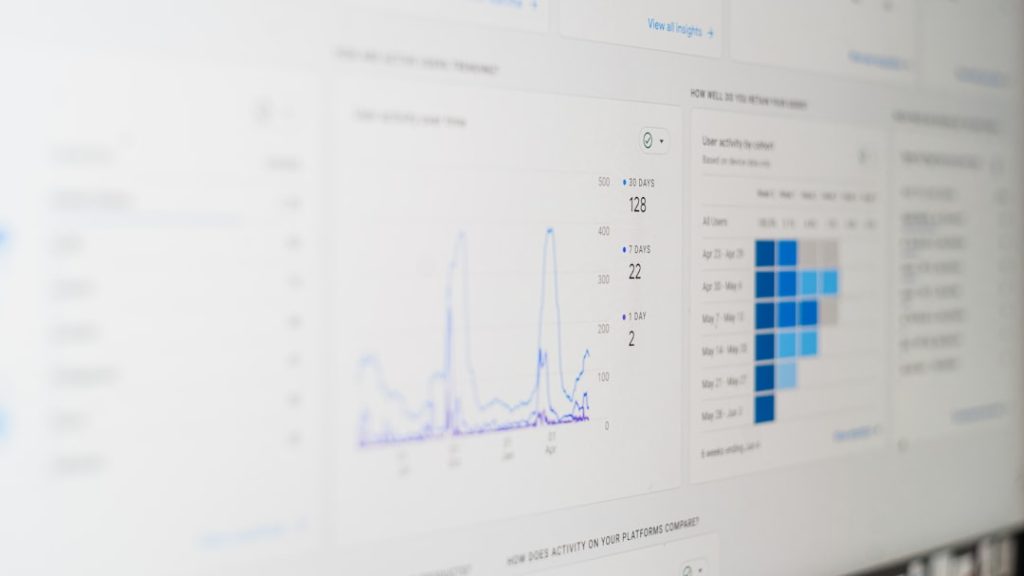
We stand at the precipice of a new era in marketing, one where intuition is refined by data, and guesswork is supplanted by precision. The quest for maximizing Return on Investment (ROI) has long been the North Star guiding our marketing efforts. However, in today’s complex digital landscape, navigating towards this star without the right tools can feel like sailing a vast ocean without a compass or a map. This is where a robust marketing analytics platform becomes not just an advantage, but an imperative. We need to understand how these platforms function as our strategic navigators, charting the most profitable course for our investments.
At its core, a marketing analytics platform is a sophisticated system designed to collect, measure, and analyze the effectiveness of our marketing campaigns. It acts as our central command center, consolidating data from a multitude of touchpoints across the customer journey. Think of it as a highly advanced telescope, allowing us to peer into the intricate workings of our marketing ecosystem and identify patterns that would otherwise remain invisible. Without this consolidated view, we are essentially trying to understand the forest by examining individual leaves – a task that offers limited insight into the overall health and growth of the ecosystem.
The Data Influx: Sources of Information
The power of any analytics platform lies in the breadth and depth of data it can ingest. We need to recognize the diverse origins of this information, each contributing a unique facet to the complete picture.
Website and Application Performance Metrics
Our websites and applications are digital storefronts. Metrics such as page views, session duration, bounce rates, conversion rates, and click-through rates on various elements provide a fundamental understanding of user engagement and the effectiveness of our digital real estate.
Social Media Engagement Data
Platforms like Facebook, Instagram, Twitter, LinkedIn, and TikTok are not just communication channels; they are vast repositories of consumer sentiment and interaction. We need to track likes, shares, comments, follower growth, reach, and impressions to gauge brand perception and campaign resonance.
Email Marketing Performance
For campaigns delivered via email, metrics like open rates, click-through rates, unsubscribe rates, and conversion rates on email-driven actions are crucial indicators of message effectiveness and audience engagement.
Paid Advertising Campaign Data
Our investments in paid channels, whether search engine marketing (SEM), social media ads, or display advertising, generate a wealth of performance data. This includes cost per click (CPC), cost per acquisition (CPA), ad spend, impressions, clicks, and conversions, all of which are vital for understanding channel efficiency.
Customer Relationship Management (CRM) Data
The information within our CRM systems offers a longitudinal view of customer interactions, purchase history, and lifetime value. Integrating this with marketing data allows us to connect campaign efforts directly to customer behavior and revenue.
Third-Party Data Integrations
Beyond our own channels, we can leverage third-party data sources for deeper market insights, competitor analysis, and audience segmentation. This could include demographic data, market trends, and industry benchmarks.
Charting the Course: Measuring Key Performance Indicators for ROI
The true value of a marketing analytics platform emerges when we move beyond simply collecting data to actively measuring the metrics that directly impact our ROI. This is where we translate raw numbers into actionable insights that drive profitability.
The Direct Line to Profitability: Conversion Rates
Conversion rates are the lifeblood of any marketing campaign aimed at generating tangible outcomes. Whether it’s a sale, a lead, a sign-up, or a download, understanding how effectively our marketing efforts are guiding users towards desired actions is paramount.
Website Conversion Rates
This measures the percentage of website visitors who complete a specific goal, such as making a purchase or filling out a form. Anomalies here can point to issues with website design, user experience, or the effectiveness of our calls to action.
Campaign-Specific Conversion Rates
Tracking conversions by individual campaign allows us to isolate successful initiatives and identify those that are underperforming, enabling us to reallocate resources more effectively.
Funnel Conversion Rates
Analyzing conversion rates at each stage of the customer journey, from awareness to consideration to decision, reveals bottlenecks. If users are dropping off at a particular stage, we know where to focus our optimization efforts.
The Bottom Line: Revenue and Profitability Metrics
Ultimately, marketing’s success is measured by its contribution to the company’s financial health. Analytics platforms provide the granular data to connect marketing spend directly to revenue and profit.
Customer Acquisition Cost (CAC)
CAC represents the total cost of acquiring a new customer. By meticulously tracking all marketing expenses and dividing by the number of new customers acquired, we can determine the efficiency of our acquisition strategies. A high CAC might indicate inefficient ad spend, poor targeting, or a weak conversion funnel.
Customer Lifetime Value (CLTV)
CLTV is the projected total revenue a customer will generate over their entire relationship with our business. Comparing CLTV to CAC is a fundamental metric for assessing the long-term sustainability of our customer acquisition model. A healthy CLTV:CAC ratio is essential for profitable growth.
Return on Ad Spend (ROAS)
ROAS directly measures the revenue generated for every dollar spent on advertising. It is a critical metric for evaluating the performance of paid media campaigns and optimizing ad budgets.
Marketing Contribution to Revenue
Sophisticated platforms can attribute a portion of overall revenue to specific marketing touchpoints and campaigns, providing a clear understanding of marketing’s direct impact on the P&L.
The Pulse of Engagement: Audience Behavior and Reach
Understanding how our audience interacts with our content and how far our message is traveling is crucial for long-term brand building and campaign effectiveness.
Audience Segmentation and Demographics
By analyzing demographic and behavioral data of those who engage with our marketing, we can refine our targeting and ensure our messages are resonating with the right people. This is like tailoring a suit; a poorly fitted suit will never look as good as one made to measure.
Reach and Impressions
These metrics indicate the total number of unique individuals who saw our content (reach) and the total number of times our content was displayed (impressions). Understanding these helps us assess the scale of our visibility.
Engagement Metrics (Likes, Shares, Comments, Clicks)
A high level of engagement suggests that our content is not only being seen but is also sparking interest and interaction, which is a positive indicator of brand connection.
Time Spent on Site/Content
The duration users spend interacting with our website or specific content pieces can indicate the depth of their interest and the perceived value of the information provided.
Navigating the Currents: Optimizing Campaigns for Maximum Impact

Data, in isolation, is inert. The true power of a marketing analytics platform lies in its ability to guide us toward informed decisions that optimize our campaigns, thereby maximizing ROI.
Iterative Improvement: The Power of A/B Testing
A/B testing, or split testing, is a fundamental methodology for optimizing marketing elements. Analytics platforms are the engine that drives and analyzes these tests, providing the empirical evidence needed to make informed choices.
Landing Page Optimization
Testing different headlines, call-to-action buttons, images, and copy on landing pages can significantly improve conversion rates. The platform helps us identify the winning variations.
Email Subject Line and Content Testing
Small changes in email subject lines can lead to substantial differences in open rates. Similarly, testing different email content and layouts can enhance click-through rates and subsequent conversions.
Ad Creative and Targeting Refinement
We can test various ad creatives, ad copy, and targeting parameters to identify what resonates best with our target audience, leading to lower acquisition costs and higher ROAS.
Resource Allocation: Directing our Investments Wisely
Understanding where our marketing budget is yielding the best results is paramount for maximizing ROI. Analytics platforms provide the clarity needed to make strategic resource allocation decisions.
Channel Performance Analysis
By comparing the performance of different marketing channels (e.g., social media, search, email, display ads), we can identify which channels are delivering the highest ROI and allocate our budget accordingly. This prevents us from pouring resources into ineffective pipelines.
Campaign Budget Optimization
Within individual campaigns, analytics can reveal which ad sets, keywords, or target audiences are performing best, allowing us to shift budget towards those that are driving the most value and away from underperformers.
Identifying Underperforming Assets
The platform can flag campaigns, ads, or content pieces that are consuming resources without generating commensurate results, allowing us to either optimize them or decommission them.
Predicting Future Trends: Proactive Marketing Strategies
The most advanced analytics platforms offer predictive capabilities, allowing us to move from reactive adjustments to proactive strategies.
Predictive Lead Scoring
By analyzing historical data, platforms can predict the likelihood of a lead converting, allowing sales and marketing teams to prioritize their efforts on the most promising prospects.
Customer Churn Prediction
Identifying customers at risk of leaving allows us to implement retention strategies before they churn, significantly impacting long-term profitability.
Demand Forecasting
Analyzing historical sales and marketing data, alongside market trends, can help us forecast future demand, enabling better inventory management and marketing campaign planning.
Uncovering Hidden Treasures: Advanced Analytics and Insights

Beyond the standard metrics, marketing analytics platforms offer deeper, more nuanced insights that can unlock significant ROI improvements. This is where we move from managing the visible to illuminating the invisible.
The Customer Journey Mapping and Analysis
Understanding the non-linear path our customers take is crucial. Analytics platforms enable us to visualize and analyze these complex journeys, identifying points of friction and opportunities for intervention.
Multi-Touch Attribution Models
Instead of solely crediting the last click, multi-touch attribution models distribute credit across all customer touchpoints that contributed to a conversion. This provides a more realistic understanding of how different marketing efforts work in synergy.
Path Analysis
We can analyze the sequence of pages or actions a user takes before converting (or abandoning). This reveals common pathways and helps us optimize the flow and content at each step.
Identifying Customer Segments with High Lifetime Value
By analyzing the behavior of our most valuable customers, we can identify common characteristics and target similar audiences more effectively, thus acquiring more high-value customers.
Competitor Benchmarking and Market Insights
Understanding our position relative to competitors and the broader market landscape is vital for strategic decision-making.
Competitive Landscape Analysis
Some platforms integrate competitive data, allowing us to benchmark our performance against competitors in terms of traffic, engagement, and keyword rankings.
Market Trend Identification
By analyzing broader market data and our own performance trends, we can identify emerging opportunities and shifts in consumer behavior that may impact our marketing strategies.
Sentiment Analysis and Brand Perception
Gauging how our brand is perceived by the public is critical for reputation management and brand building.
Social Listening and Brand Mentions
Tracking mentions of our brand across social media and the web, and analyzing the sentiment (positive, negative, neutral) associated with them, provides invaluable feedback.
Customer Feedback Aggregation
Consolidating feedback from surveys, reviews, and support interactions allows for a holistic understanding of customer satisfaction and areas for improvement.
Building the Ship: Selecting and Implementing the Right Platform
| Metric | Description | Typical Value / Range | Importance |
|---|---|---|---|
| Customer Acquisition Cost (CAC) | Average cost to acquire a new customer through marketing efforts | 50 – 200 | High |
| Return on Marketing Investment (ROMI) | Revenue generated for every unit spent on marketing | 1.5 – 5x | High |
| Conversion Rate | Percentage of visitors who complete a desired action | 2% – 10% | High |
| Customer Lifetime Value (CLV) | Projected revenue from a customer over their entire relationship | 500 – 5000 | High |
| Churn Rate | Percentage of customers lost over a period | 5% – 15% | Medium |
| Click-Through Rate (CTR) | Percentage of ad impressions that resulted in clicks | 0.5% – 3% | Medium |
| Engagement Rate | Level of interaction (likes, shares, comments) on marketing content | 1% – 10% | Medium |
| Lead-to-Customer Rate | Percentage of leads that convert into paying customers | 10% – 30% | High |
| Marketing Qualified Leads (MQLs) | Number of leads deemed more likely to become customers | Varies by campaign | High |
| Cost Per Click (CPC) | Average cost paid for each click in paid advertising | 0.5 – 5 | Medium |
The decision to invest in a marketing analytics platform is significant, and its successful implementation is as crucial as the platform itself. We need to approach this with strategic foresight.
Defining Our Objectives: What Do We Want to Achieve?
Before even looking at platforms, we must clearly define our overarching marketing goals and the specific KPIs that will measure our success. Without this clarity, selecting a platform is like buying tools without knowing what we intend to build.
Identifying Key Business Questions
What are the most critical questions we need our marketing to answer? (e.g., “Which campaigns are driving the most profitable customers?”, “Where are we losing potential leads?”)
Prioritizing Measurable Outcomes
Focus on objectives that can be quantified and tracked, such as revenue growth, lead generation volume, customer retention rates, or market share.
Evaluating Platform Features and Functionality
The market offers a diverse range of analytics platforms, each with its unique strengths. We need to select one that aligns with our specific needs and technical capabilities.
Data Integration Capabilities
Can the platform seamlessly connect with all our existing data sources (CRM, website, social media, advertising platforms, etc.)? The ability to consolidate data is fundamental.
User-Friendliness and Learning Curve
Is the interface intuitive? Will our team be able to effectively use the platform with reasonable training? A complex but underutilized tool defeats its purpose.
Reporting and Visualization Tools
Does the platform offer customizable dashboards and reports that present data in a clear, actionable, and visually appealing manner? Seeing is understanding.
Advanced Analytics and Predictive Capabilities
Does the platform offer features like A/B testing, attribution modeling, and predictive analytics that can drive deeper insights and proactive strategies?
Scalability and Future-Proofing
Can the platform grow with our business and adapt to evolving marketing strategies and new data sources?
The Art of Implementation: Getting it Right from the Start
The most powerful tool is useless if not deployed effectively. A thoughtful implementation strategy ensures we harness its full potential from day one.
Data Governance and Quality Assurance
Establishing clear guidelines for data collection, management, and cleansing is essential for ensuring the accuracy and reliability of our insights. Garbage in, garbage out.
Cross-Functional Team Training and Adoption
Ensuring that our marketing, sales, and even product teams understand how to access and leverage the platform’s data fosters a data-driven culture.
Phased Rollout and Iterative Refinement
Starting with a pilot program or focusing on specific datasets can allow for smoother adoption and refinement of the implementation process before a full-scale rollout.
In conclusion, the deliberate integration of a marketing analytics platform into our strategic arsenal is no longer an option, but a necessity for those seeking to thrive in today’s competitive landscape. It transforms our marketing from a series of educated guesses into a finely tuned engine of growth, meticulously tracking our progress and guiding us towards the most profitable destinations. By embracing these platforms, we equip ourselves with the vision to see, the understanding to act, and the precision to succeed, ultimately maximizing our ROI and charting a course for sustained success.