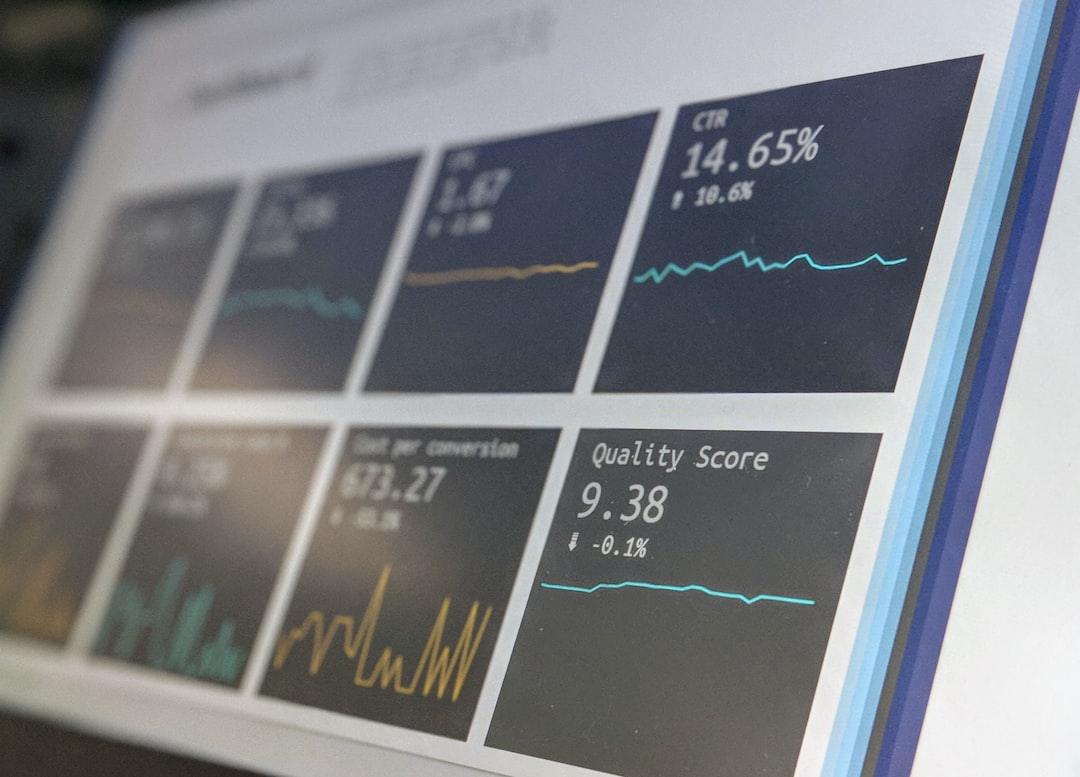
In the ever-evolving landscape of marketing, raw data, like an unmined vein of ore, holds immense potential. However, without the right tools and techniques, its true value remains largely inaccessible. This is where data visualization emerges as our indispensable ally, transforming complex datasets into clear, actionable narratives. We are no longer content with simply collecting information; we are driven to understand it, to extract meaning, and to leverage those insights to achieve superior marketing outcomes. This article explores how we, as marketers, can harness the power of data visualization to maximize our impact, turning abstract numbers into compelling stories that resonate with our audiences and guide our strategic decisions.
The Foundation: Understanding Our Data’s Landscape
Before we can visualize anything, we must first cultivate a robust understanding of the data we possess. This isn’t merely about identifying what data points exist, but rather about comprehending their origins, their relationships, and the potential biases they might contain. Think of it as surveying the terrain before laying down the blueprints for a magnificent structure. If the foundation is unstable, the entire edifice is at risk.
Identifying Key Data Sources and Their Relevance
Our marketing efforts are fueled by a diverse ecosystem of data. We collect information from website analytics, social media platforms, customer relationship management (CRM) systems, email marketing campaigns, and advertising platforms. Each of these sources offers a unique perspective, a different facet of our customer journey.
Website Analytics: Decoding Visitor Behavior
Website analytics are a treasure trove of information about how potential and existing customers interact with our online presence. We track metrics like page views, bounce rates, time on site, and conversion rates. These numbers, individually, offer glimpses. When visualized, however, they paint a vivid picture of user journeys and pain points. For example, a heatmap can clearly illustrate which areas of our website are most engaging and which are being overlooked, guiding us toward necessary design or content adjustments. Similarly, funnel visualizations can expose where users are dropping off in the conversion process, enabling us to pinpoint and address specific obstacles.
Social Media Metrics: Gauging Audience Engagement and Sentiment
Social media platforms provide us with a direct line to our audience’s pulse. We monitor engagement rates, reach, impressions, follower growth, and importantly, sentiment analysis. A simple count of likes or shares can be misleading. However, visualizing sentiment over time, perhaps through a sentiment meter or word cloud depicting common themes in comments, allows us to understand the emotional undertones of public perception towards our brand and campaigns. This is crucial for not just understanding what is being said, but how it is being said, and the underlying emotions driving that conversation.
CRM Data: Understanding Customer Lifetime Value and Personalization Opportunities
Our CRM systems hold invaluable data about our existing customer base. This includes purchase history, communication logs, demographic information, and customer service interactions. Visualizing this data allows us to segment our audience effectively, identify high-value customers, and understand patterns in their purchasing behavior. A Pareto chart, for instance, can quickly highlight the vital few customers responsible for a disproportionate amount of revenue, allowing us to refine retention strategies for this critical group. Furthermore, by visualizing customer journeys within our CRM, we can identify opportunities for more personalized and timely communication, moving from a one-size-fits-all approach to a bespoke experience.
Ensuring Data Quality and Integrity: The Bedrock of Trustworthy Visualizations
The most visually stunning chart is worthless if it’s built on flawed data. Data quality is paramount. We implement rigorous processes to ensure accuracy, completeness, and consistency. This involves data cleaning, de-duplication, and validation checks. Without this bedrock of trust, our visualizations become mere illusions, leading us astray rather than guiding us forward. Imagine building a magnificent bridge on shaky ground; the inevitable collapse serves as a stark reminder of the importance of its foundation.
Implementing Data Cleaning and Validation Protocols
Our data cleaning protocols involve systematically identifying and correcting errors, inconsistencies, and inaccuracies within our datasets. This could include standardizing formats, addressing missing values, and correcting typographical errors. Validation checks, on the other hand, verify that the data conforms to predefined rules and constraints, ensuring its accuracy and integrity.
Addressing Data Bias and Its Implications for Visualization
Bias in data can subtly distort our understanding, leading to skewed interpretations and ultimately, misinformed decisions. We are acutely aware of potential biases, whether they stem from sampling methods, data collection tools, or inherent societal prejudices reflected in the data itself. We strive to identify and, where possible, mitigate these biases before they manifest in our visualizations, ensuring our insights are as objective and representative as possible.
Bringing Data to Life: Choosing the Right Visualizations
Once we have a solid grasp of our data, the next crucial step is to select the most effective visualization techniques to communicate our findings. This is not an arbitrary choice; it’s a strategic decision driven by the type of data we have and the story we aim to tell. Different visual formats excel at revealing different patterns and relationships.
Selecting Visualization Types Based on Data and Objectives
The choice of visualization is akin to selecting the right lens for a camera. A wide-angle lens captures a broad scene, while a telephoto lens focuses on a specific detail. We select our “lenses” based on what we want to emphasize.
Bar Charts and Histograms: Comparing Categories and Distributions
Bar charts are our workhorses for comparing discrete categories. Whether we’re comparing sales performance across different product lines or website traffic from various marketing channels, bar charts provide a clear and immediate visual comparison. Histograms, on the other hand, are invaluable for understanding the distribution of a single variable. They show us how frequently different values occur within a dataset, revealing patterns like: are most of our customers in a particular age range? Are our sales clustered around specific price points?
Line Charts and Area Charts: Tracking Trends Over Time
When our focus is on temporal progression, line charts and area charts are our go-to tools. Line charts are excellent for illustrating continuous trends, such as website traffic over months or the growth of our subscriber list. Area charts build upon this by emphasizing the magnitude of change over time, making it easier to visualize cumulative growth or the impact of seasonal fluctuations. We use these to spot upward or downward trajectories, identify seasonal peaks and troughs, and forecast future performance.
Scatter Plots and Bubble Charts: Revealing Relationships and Correlations
Scatter plots are powerful for exploring the relationship between two numerical variables. They allow us to detect correlations, identify outliers, and gain insights into potential causal links. For instance, we might use a scatter plot to see if there’s a correlation between ad spend and website conversions. Bubble charts extend this by incorporating a third variable, represented by the size of the bubble, adding another dimension to our analysis. These visualizations are like scientific experiments in visual form, helping us discover hidden connections.
Pie Charts and Donut Charts: Illustrating Proportions and Composition
While often criticized for their potential to mislead, pie charts and donut charts can be effective for illustrating parts of a whole, provided the number of categories is small. We use them sparingly, primarily for demonstrating market share for a few key competitors or the breakdown of our marketing budget into broad categories. The key is to ensure they are used for clear, simple proportions, avoiding the clutter that makes them difficult to interpret.
Leveraging Interactive Visualizations for Deeper Exploration
Static visualizations offer a snapshot, but interactive visualizations offer an immersive experience. They allow us, and our stakeholders, to delve deeper into the data, explore specific segments, and uncover nuanced insights. This is like having a magnifying glass and a microscope at our disposal, allowing for both broad understanding and detailed examination.
Enabling User-Driven Exploration and Drill-Down Capabilities
Interactive dashboards empower users to filter data, drill down into specific categories, and manipulate variables to explore relationships themselves. This fosters a more engaged and intuitive understanding of the data, moving beyond passive consumption to active discovery. We can set up dashboards where a marketing manager can click on a specific region to see the localized campaign performance or a product manager can drill down into a specific product’s sales trends.
Building Dashboards for Real-Time Monitoring and Decision-Making
We invest in building dynamic dashboards that provide real-time or near real-time updates on key marketing metrics. These dashboards act as our central nervous system, offering an up-to-the-minute pulse on campaign performance, audience engagement, and overall business health. This immediate visibility allows us to react swiftly to changing market conditions, capitalize on emerging opportunities, and mitigate potential crises before they escalate.
Communicating Insights: Transforming Data into Actionable Stories
The ultimate goal of data visualization is not just to create pretty pictures, but to communicate clear, compelling, and actionable insights. We aim to translate complex data into narratives that resonate with our audiences, whether they are internal stakeholders, clients, or even end-customers. We become data storytellers, weaving tales of opportunity, success, and areas for improvement.
Tailoring Visualizations to Specific Audiences and Their Needs
Just as a skilled orator adapts their speech to their audience, we tailor our visualizations to the specific needs and understanding of each stakeholder group. What is crucial for a data analyst might be overwhelming for a sales executive.
Simplifying Complex Information for Non-Technical Stakeholders
For executive leadership or non-technical teams, we prioritize clarity and conciseness. We avoid jargon and focus on high-level takeaways. Visualizations are designed to answer specific business questions, clearly outlining the implications of the data for strategic decisions. A simple trend line showing projected revenue growth, for example, is far more impactful for a CEO than a detailed statistical breakdown.
Providing Granular Detail for Analytical Teams and Campaign Managers
For our analytical teams and campaign managers, we can offer more detailed and nuanced visualizations. This includes breakdowns by demographic, channel, or campaign element, allowing them to delve into the specifics and identify granular optimization opportunities. This is where we provide the tools for them to fine-tune their efforts, like a skilled mechanic adjusting the intricate workings of an engine.
Integrating Visualizations into Marketing Reports and Presentations
Data visualizations are not confined to standalone reports; they are woven into the fabric of our regular marketing communications. They form the backbone of our presentations, reports, and even social media content.
Enhancing Reports with Visual Storytelling for Greater Engagement
By incorporating well-designed charts and graphs, we transform otherwise dry reports into engaging and easily digestible narratives. Visualizations break up text, highlight key findings, and make complex information more accessible. This increases the likelihood that our reports will be read, understood, and acted upon. We aim for our reports to be not just informative, but inspiring.
Using Visuals to Support Decision-Making and Justify Marketing Investments
When presenting marketing plans or performance reviews, compelling visualizations are essential for justifying our strategies and demonstrating the return on our investments. Seeing the tangible impact of a campaign, visually represented, provides a powerful argument for continued funding and strategic support. They are the trump cards that illustrate our effectiveness and guide future resource allocation.
Driving Performance: Data Visualization as a Catalyst for Optimization
Ultimately, the true power of data visualization lies in its ability to drive tangible improvements in our marketing performance. By providing clear, actionable insights, it empowers us to make smarter decisions, optimize our campaigns, and achieve a greater return on our marketing efforts. It is the engine that propels us forward, fueled by understanding.
Identifying Performance Bottlenecks and Opportunities for Improvement
Visualizations act as our diagnostic tools, helping us pinpoint areas where our marketing efforts are falling short and identifying untapped opportunities. A clear visualization of conversion funnels, for instance, can quickly reveal where potential customers are abandoning our website, allowing us to focus our optimization efforts on those specific points.
A/B Testing and Experimentation Informed by Visual Data
Data visualization is instrumental in the design and analysis of A/B tests and other marketing experiments. We use visualizations to compare the performance of different variations, to understand what resonates best with our audience, and to iterate rapidly towards more effective strategies. Seeing the clear uplift a particular headline or call-to-action provides, visually rendered, is a powerful motivator for further optimization.
Optimizing Campaigns for Better ROI and Customer Engagement
With the insights gleaned from data visualization, we can fine-tune our campaigns with remarkable precision. This leads to more efficient allocation of resources, higher conversion rates, and ultimately, a stronger return on investment. It allows us to move from guesswork to informed strategy, from broad strokes to targeted interventions.
Personalization Strategies Driven by Visual Customer Segmentation
By visualizing customer data, we can create detailed segments based on demographics, behavior, and preferences. This allows us to deliver highly personalized marketing messages and offers, significantly increasing engagement and conversion rates. Imagine sending the right message, to the right person, at the right time, all informed by visual understanding of their journey.
Allocating Budget Strategically Based on Performance Insights
Data visualizations provide the empirical evidence needed to make informed decisions about budget allocation. We can clearly see which channels and tactics are delivering the highest ROI, allowing us to shift resources away from underperforming areas and toward those that demonstrably drive results. This ensures our marketing spend is a strategic investment, not a blind bet.
The Future of Marketing: Embracing a Data-Driven, Visually Intelligent Approach
As we look ahead, the role of data visualization in marketing will only continue to grow in importance. The volume and complexity of data will increase, making visual interpretation not just beneficial, but essential. We are committed to staying at the forefront of this evolution, continuously honing our skills and adopting new technologies to ensure we remain agile, informed, and impactful.
Staying Ahead of the Curve: Emerging Trends in Data Visualization for Marketing
The field of data visualization is constantly innovating. We are actively exploring emerging trends that promise to further enhance our marketing capabilities.
The Rise of AI and Machine Learning in Automated Visualization
Artificial intelligence and machine learning are beginning to automate aspects of data visualization, identifying patterns and generating insights that might otherwise be missed. We are exploring how these technologies can help us uncover deeper, predictive insights and streamline our analysis processes. This allows us to spend less time on manual data manipulation and more time on strategic interpretation.
Advanced Analytics and Predictive Visualizations
Moving beyond descriptive analytics, we are increasingly leveraging advanced analytics and predictive visualizations. These tools allow us to forecast future trends, predict customer behavior, and proactively identify potential challenges and opportunities. This shifts our marketing approach from reactive to predictive, from addressing problems to proactively shaping outcomes.
Cultivating a Data-Literate Marketing Team
For data visualization to be truly effective, it must be embraced by our entire marketing team. We are committed to fostering a culture of data literacy, providing training and resources to ensure that all team members can understand, interpret, and leverage visual data to inform their daily work.
Continuous Learning and Skill Development in Data Interpretation
We recognize that mastering data visualization is an ongoing journey. We invest in continuous learning opportunities for our team, encouraging them to explore new tools, attend workshops, and share best practices. This ensures that our collective ability to translate data into actionable insights remains sharp and relevant. We are building a team of data detectives, skilled in uncovering the hidden stories within numbers.
Fostering Collaboration Between Marketing and Data Teams
Effective data visualization often necessitates close collaboration between marketing professionals and data analysts. We believe in building strong partnerships that ensure a shared understanding of business objectives and the most effective ways to represent data to achieve them. This synergy is a powerful multiplier of our collective intelligence.
In conclusion, data visualization is no longer a secondary concern in marketing; it is a fundamental pillar of our success. By diligently understanding our data, strategically selecting our visualization tools, and effectively communicating our findings, we are unlocking a deeper level of insight and driving unprecedented impact. We are transforming raw data into a narrative of growth, efficiency, and customer connection, ensuring that our marketing efforts are not just seen, but truly understood and acted upon. The future of marketing is, unequivocally, visual.